
The end of summer can feel like hitting the fast-forward button. One minute everyone is sleeping in, and the next you’re searching for missing socks at 6:30 in the morning while someone insists they absolutely cannot eat cereal again.
If that sounds familiar, you’re not alone.
A solid back-to-school routine helps everyone transition from vacation mode to school mode with less stress and fewer last-minute surprises. The goal is not to create a military schedule. It is to build simple habits that make mornings smoother, homework easier, and bedtime less of a daily negotiation.
Whether you’re preparing for kindergarten, elementary school, middle school, or high school, this guide will help you create a back-to-school routine that actually works.
Why a Back-to-School Routine Matters
Children and teens generally do better when they know what to expect. Predictable routines can help reduce morning stress, improve time management, and encourage healthy habits like getting enough sleep and eating breakfast.
A good routine also benefits parents. Instead of constantly reminding everyone what to do next, the day flows more naturally because expectations are already established.
The best part? A routine does not have to be perfect to be effective.
Start Your Routine Before School Begins
One of the biggest mistakes families make is waiting until the night before school starts.
Instead, begin easing into your back-to-school routine about one to two weeks before the first day.
During this time, you can:
- Gradually move bedtime earlier by 15 to 30 minutes every few days.
- Wake up closer to the school schedule.
- Practice morning routines.
- Organize school supplies.
- Talk about expectations for the school year.
Small adjustments feel much easier than making every change overnight.
Related Read: First Day of School Teacher Gifts: 20 Thoughtful Ideas Teachers Will Actually Appreciate
Create a Consistent Sleep Schedule
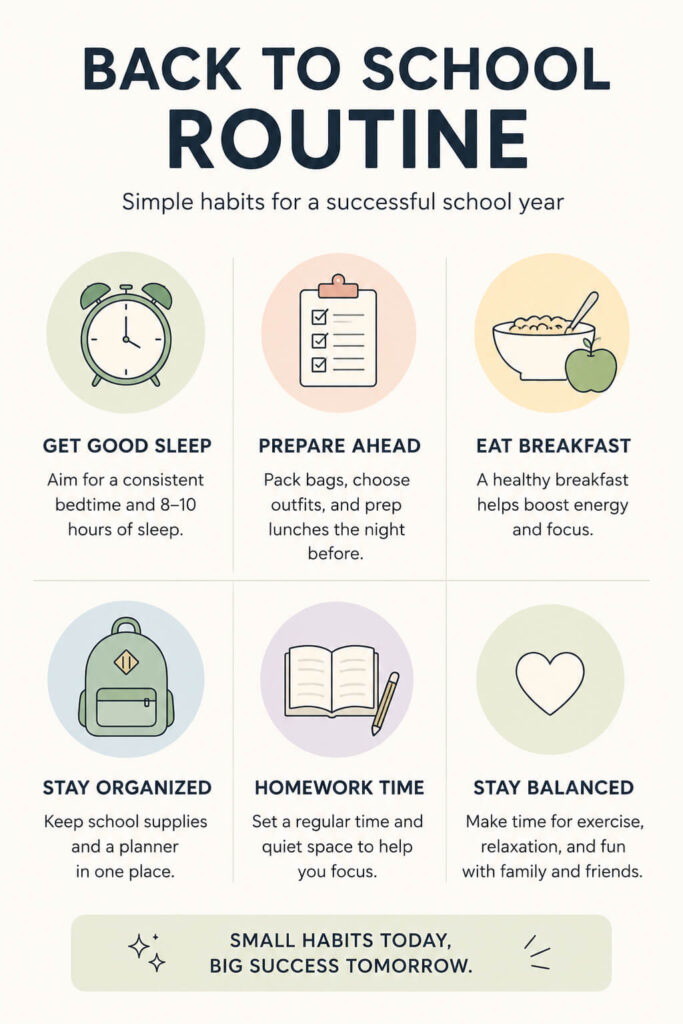
Sleep is one of the most important parts of any back-to-school routine.
According to the American Academy of Sleep Medicine, school-age children and teenagers need age-appropriate amounts of sleep to support learning, attention, behavior, and overall health.
General recommendations include:
- Ages 6 to 12, about 9 to 12 hours
- Ages 13 to 18, about 8 to 10 hours
To encourage better sleep:
- Set a consistent bedtime.
- Keep wake-up times similar every day.
- Avoid caffeine late in the day.
- Turn off screens at least 30 to 60 minutes before bedtime when possible.
- Create a calming bedtime routine.
Your future morning self will thank you.
Build a Simple Morning Routine
Mornings are much less chaotic when everyone knows what happens next.
A simple morning routine might look like this:
- Wake up.
- Make the bed.
- Get dressed.
- Brush teeth and wash face.
- Eat breakfast.
- Pack lunch if needed.
- Grab backpack.
- Head out the door.
You can even create a checklist for younger children so they can follow each step independently.
Fewer reminders mean fewer opportunities to hear, “Wait… where are my shoes?”
Prepare Everything the Night Before
This is probably the biggest game changer.
Instead of scrambling every morning, prepare as much as possible the evening before.
Things to prepare include:
- Clothes
- Shoes
- Backpacks
- Homework
- Water bottles
- Lunches or lunch ingredients
- Sports equipment
- Musical instruments
- Permission slips
Think of it as doing your morning self a huge favor.
Organize a Homework Routine
Homework becomes much less stressful when students know exactly when and where it happens.
Choose a regular homework time that fits your family’s schedule.
Helpful homework habits include:
- Working in a quiet space.
- Keeping school supplies nearby.
- Taking short breaks during longer assignments.
- Completing homework before recreational screen time, if that works for your household.
- Asking questions when something is confusing, rather than waiting until bedtime.
Consistency often matters more than the exact time.
Set Up a Homework Station
Having one designated study area can make a surprising difference.
A homework station does not have to be fancy.
Include:
- Good lighting
- Comfortable seating
- Pencils and pens
- Paper
- Chargers for devices if needed
- A calendar or planner
- Highlighters
- Sticky notes
Keeping everything together saves time and reduces distractions.
Make Breakfast Part of the Routine
Breakfast helps provide energy for the school day.
Quick breakfast ideas include:
- Oatmeal with fruit
- Yogurt and granola
- Whole grain toast with peanut butter
- Eggs and toast
- Smoothies
- Overnight oats
- Whole grain cereal with milk
The simpler the meal, the easier it is to stick with the routine.
Keep School Supplies Organized
Avoid the daily treasure hunt for pencils.
Designate one spot at home for school supplies.
Store items like:
- Notebooks
- Extra pencils
- Glue sticks
- Scissors
- Printer paper
- Calculators
- Art supplies
Refill backpacks once a week so students are always prepared.
Use a Family Calendar
A family calendar keeps everyone on the same page.
Include:
- School holidays
- Tests
- Sports practices
- Club meetings
- School events
- Field trips
- Doctor appointments
Digital calendars work well for many families, but a paper calendar on the refrigerator can be just as effective.
Choose whichever system everyone will actually use.
Encourage Independence
As children grow, they can take on more responsibility.
Depending on age, students can:
- Pack their own backpack.
- Choose tomorrow’s outfit.
- Prepare simple lunches.
- Set their own alarm.
- Check homework assignments.
- Refill water bottles.
- Keep track of permission slips.
Helping children develop independence builds confidence and useful life skills.
Limit Morning Decisions
Decision fatigue is real.
Reduce unnecessary choices by planning.
For example:
- Choose outfits the night before.
- Plan breakfasts for the week.
- Keep lunch supplies organized.
- Assign a regular location for backpacks and shoes.
Fewer decisions mean smoother mornings.
Keep Screen Time Balanced
Phones, tablets, televisions, and gaming systems can easily stretch routines beyond what was expected.
Consider setting family expectations around screen use during school days.
For many families, helpful guidelines include:
- Finish homework first.
- Avoid screens right before bedtime.
- Keep devices away from the dinner table.
- Create screen-free family time.
The goal is balance, not perfection.
Include Time for Physical Activity
Children and teens benefit from regular physical activity.
After sitting in classrooms for much of the day, movement can help improve mood, energy, and overall well-being.
Ideas include:
- Walking the dog
- Riding bikes
- Playing outside
- Dancing
- Organized sports
- Family walks
- Backyard games
Even short periods of activity add up.
Don’t Overschedule Every Afternoon
It can be tempting to sign up for every club, lesson, and sport.
However, free time is valuable too.
Students need opportunities to:
- Relax
- Read
- Play
- Spend time with family
- Pursue hobbies
- Get enough sleep
A balanced schedule often feels much more manageable throughout the school year.
Create an Evening Routine
Evenings set the tone for the next morning.
A simple evening routine could include:
- Finish homework.
- Eat dinner.
- Pack backpacks.
- Prepare lunches.
- Lay out clothes.
- Take showers.
- Read or relax.
- Go to bed at the scheduled time.
Repeating the same steps each evening helps everyone know what comes next.
Stay Flexible
Life happens.
Someone gets sick.
A project is suddenly due tomorrow.
The family dog decides your homework looks delicious.
A routine should help your family, not create more stress.
If something stops working, adjust it.
The best back-to-school routine is one that fits your family’s needs and can be maintained over time.
Back to School Routine Checklist
Here’s a simple checklist you can follow every day.
Morning
- Wake up on time.
- Make the bed.
- Get dressed.
- Brush teeth and wash face.
- Eat breakfast.
- Pack lunch if needed.
- Grab backpack.
- Leave on time.
After School
- Have a healthy snack.
- Relax for a few minutes.
- Complete homework.
- Prepare for tomorrow.
- Enjoy physical activity.
- Spend time with family.
Evening
- Pack the backpack.
- Choose tomorrow’s clothes.
- Prepare lunch.
- Charge school devices.
- Shower if needed.
- Read or relax.
- Go to bed on time.
Common Back-to-School Routine Mistakes
Even well-planned routines can run into problems.
Watch out for these common mistakes:
- Going to bed too late.
- Waiting until the morning to pack backpacks.
- Overscheduling activities.
- Skipping breakfast.
- Forgetting to review homework.
- Leaving shoes, jackets, or backpacks in random places.
- Expecting a new routine to become perfect immediately.
Building habits takes time, so give everyone a little grace.
Tips for Keeping Your Routine Going All Year
Once school starts, consistency is key.
To keep your back-to-school routine on track:
- Review routines every few weeks.
- Adjust schedules as activities change.
- Celebrate small successes.
- Keep communication open.
- Focus on progress instead of perfection.
- Stay organized with calendars and checklists.
The more consistent your routine becomes, the easier everyday school life tends to feel.
Final Thoughts
Creating a successful back-to-school routine is less about strict schedules and more about building habits that reduce stress and make everyday life easier.
Start preparing before school begins, establish consistent sleep and morning routines, organize homework, and plan whenever possible. Keep the routine realistic, flexible, and appropriate for your child’s age.
Before long, the morning scramble becomes a little calmer, homework feels more manageable, and everyone starts the day with a lot less stress. That means more time for learning, family, and maybe even finding both matching shoes on the first try.
Follow me on:






Leave a Reply