
Last updated on at 12:30 pm
There are books you read once, enjoy, and move on from. Then there are books you return to when life feels loud, stressful, or emotionally cluttered.
Pride and Prejudice belongs firmly in the second category.
For more than two centuries, readers have been curling up with this novel not just because it is a classic, but because it feels comforting. Gentle. Familiar. Emotionally satisfying.
So what makes Pride and Prejudice such a powerful comfort read, even for people who know exactly how it ends?
Here is why this story continues to feel like a literary cup of tea.
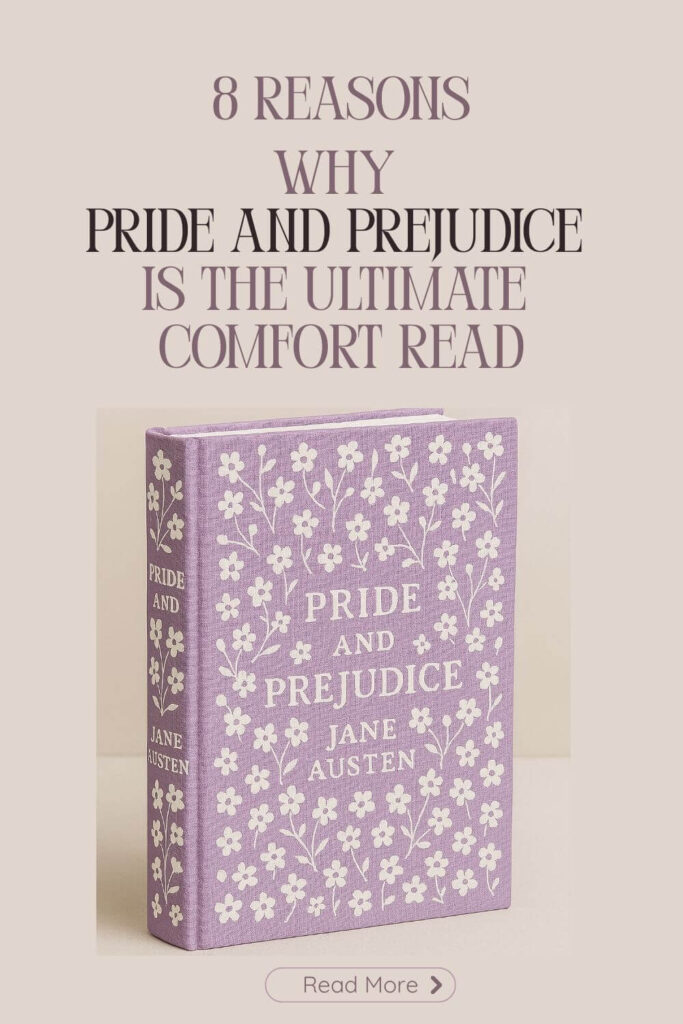
It creates a world people enjoy spending time in
One of the first things readers often notice is how pleasant the world of Pride and Prejudice feels.
There are countryside walks, family sitting rooms, small gatherings, quiet conversations, and handwritten letters. The setting stays close to homes, neighborhoods, and social visits. Even moments of tension unfold in drawing rooms, gardens, and village assemblies.
The scale is intimate. The pace is unhurried.
This makes the novel easy to settle into. It does not overwhelm the reader with complex politics or violent conflict. Instead, it invites you into a contained social world where the drama is emotional rather than chaotic.
That atmosphere is a big reason people return to the book when they want something soothing and immersive.
The story moves gently but purposefully
Comfort reads often share a common trait. They are steady.
Pride and Prejudice unfolds gradually. Conversations build relationships. Letters shift understanding. Small moments quietly reshape opinions.
There is movement, but it is never frantic. You always feel oriented. You always know who you are with and why something matters.
This steady rhythm makes the novel particularly rereadable. Readers can dip into a few chapters at night without feeling lost or pressured to rush.
The story carries you instead of pulling you.
The characters feel familiar in the best way
Comfort reading thrives on emotional familiarity, and Pride and Prejudice is rich with recognizable personalities.
Elizabeth Bennet’s wit and curiosity.
Jane Bennet’s gentleness.
Mrs. Bennet’s anxious enthusiasm.
Mr. Collins’ social awkwardness.
Lady Catherine’s commanding presence.
These characters feel like people you know. Their habits, flaws, and conversations become oddly reassuring once you have spent time with them.
On rereads, many readers look forward to encountering these personalities again, the way one looks forward to revisiting favorite fictional towns or longtime television characters.
The emotional tension never becomes exhausting
There is conflict in Pride and Prejudice, but it remains grounded in relationships, misunderstandings, and social pressures.
There are no shocking twists meant to destabilize the reader. The emotional stakes grow naturally out of pride, embarrassment, attraction, loyalty, and family responsibility.
Because the tension stays human and proportionate, it creates interest without emotional fatigue. Readers can care deeply without feeling drained.
This balance is one of the reasons the novel works so well as a comfort reread.
The romance unfolds in a deeply satisfying way
Romance plays a central role in why people find this book comforting.
Elizabeth and Darcy’s relationship develops slowly through conversation, misjudgment, reflection, and change. Their bond is shaped by emotional awareness rather than impulse.

When readers revisit the story, they already know where the relationship is heading. That knowledge creates anticipation instead of anxiety.
Small scenes become warm instead of tense. Dialogue becomes layered rather than confusing. The emotional payoff feels reassuring rather than uncertain.
Many comfort readers enjoy exactly this experience. Knowing the destination allows them to savor the journey.
The novel offers emotional reassurance
At its heart, Pride and Prejudice is a story about people learning to see one another more clearly.
Characters confront mistaken impressions. They reassess their behavior. They grow in humility, empathy, and understanding.
For many readers, this is quietly reassuring. It reflects the belief that people can change, relationships can deepen, and misunderstandings can be repaired.
Stories that carry this emotional promise often become comfort books because they leave readers feeling steadied rather than unsettled.
It becomes richer with every reread
Comfort reads are rarely one-time experiences.
Each return to Pride and Prejudice reveals new pleasures. The humor becomes sharper. The foreshadowing becomes clearer. The emotional subtleties become more noticeable.
Readers begin to anticipate certain scenes, certain letters, certain conversations. That anticipation itself becomes part of the comfort.
The book transforms from a story into a familiar emotional space.
Why readers keep returning to Pride and Prejudice
People do not reread this novel simply because it is famous.
They reread it because it offers:
• a soothing pace
• an intimate setting
• familiar characters
• gentle emotional tension
• a satisfying romantic arc
• and a sense of emotional order
It allows readers to step into a world where feelings are taken seriously, misunderstandings are explored thoughtfully, and relationships unfold with care.
That experience does not age.
It comforts.
And that is why Pride and Prejudice continues to be one of the most beloved comfort reads in literary history.
Follow me on:






Leave a Reply