
Have you ever picked up your phone just to check the weather, then somehow ended up watching a video about raccoons stealing dog food 45 minutes later? You’re not alone.
Digital devices have become part of almost everything we do. We use them for work, school, entertainment, shopping, navigation, banking, and staying connected with family and friends. While technology makes life more convenient, spending too much time staring at screens can leave many people feeling mentally drained, distracted, or overwhelmed.
Learning how to take a break from digital devices does not mean giving up technology forever or moving into a cabin in the woods with zero Wi-Fi. It simply means creating healthier habits that give your brain and body a chance to recharge.
In this guide, you’ll learn why taking regular digital breaks matters, the signs you may need one, practical ways to unplug, and how to make those habits stick without feeling deprived.

Why Taking a Break From Digital Devices Matters
Technology is an amazing tool, but it works best when you’re the one in control.
Research has shown that excessive screen time, particularly recreational screen time and constant notifications, can contribute to stress, sleep disruption, reduced attention, and less face-to-face interaction. Many people also report feeling mentally exhausted after hours of switching between emails, social media, videos, and messaging apps.
Taking regular breaks from digital devices can help you:
- Reduce mental fatigue
- Improve focus and concentration
- Encourage better sleep habits, especially when limiting screens before bedtime
- Spend more quality time with family and friends
- Make room for hobbies and physical activity
- Feel more present throughout the day
Think of it as giving your brain a coffee break, except instead of caffeine, it gets a little peace and quiet.
Signs You May Need a Digital Break
Not everyone needs a full digital detox. Sometimes, all you need are healthier boundaries.
Here are some common signs it may be time to unplug for a while.
You Check Your Phone Without Thinking
If your hand reaches for your phone every few minutes, even when nothing has happened, your habit may have become automatic.
Notifications Control Your Attention
Every buzz, ding, or vibration interrupts what you’re doing. Before long, your focus has packed its bags and gone on vacation.
You Feel Mentally Drained
Hours of switching between apps, emails, and social media can leave your brain feeling overloaded.
You’re Losing Sleep
Using phones, tablets, or laptops right before bed may make it harder to fall asleep because the stimulating content keeps your mind active. Bright screens can also interfere with your body’s natural sleep cycle.
Real-Life Activities Feel Less Interesting
If scrolling has replaced reading, hobbies, conversations, or outdoor activities, it may be time to restore some balance.
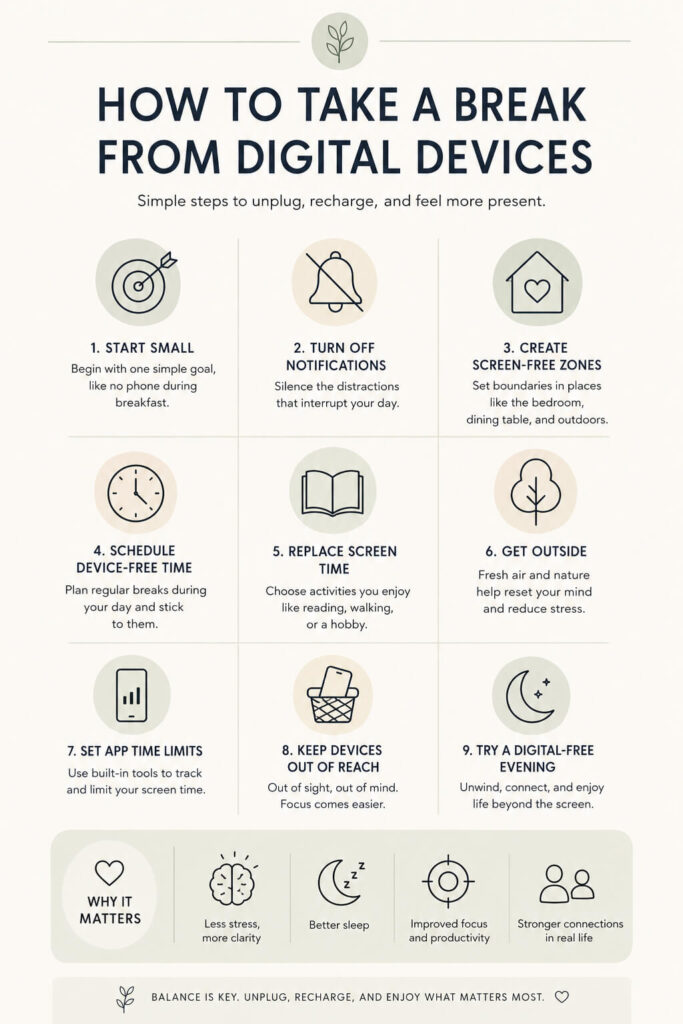
How to Take a Break From Digital Devices
Now for the practical part. The good news is that you don’t have to quit technology completely. Small, consistent changes often make the biggest difference.
Start With Small Goals
Trying to eliminate all screen time overnight usually doesn’t work.
Instead, choose one realistic goal, such as:
- No phone during breakfast
- No social media for one hour each evening
- One screen-free afternoon every weekend
Small wins build lasting habits.
Turn Off Nonessential Notifications
Not every app deserves your immediate attention.
Disable notifications for games, shopping apps, social media, and any other app that isn’t important. Your phone should interrupt you only when it truly needs to.
You’ll probably discover that most notifications weren’t nearly as urgent as they sounded.
Create Screen-Free Zones
Choose places where digital devices are not allowed.
Good options include:
- The dining table
- The bedroom
- The bathroom
- Family game nights
- Outdoor walks
These screen-free spaces help your brain associate certain environments with relaxation and real-life interaction.
Schedule Device-Free Time
Instead of waiting until you feel overwhelmed, plan regular breaks throughout the day.
For example:
- The first 30 minutes after waking up
- During meals
- One hour before bedtime
- While exercising
- During conversations with friends
Treat these breaks like appointments that are just as important as meetings.
Replace Screen Time With Something Enjoyable
One reason digital breaks fail is that people remove the habit without replacing it.
Instead of scrolling, try:
- Reading a book
- Going for a walk
- Cooking a new recipe
- Gardening
- Drawing or painting
- Solving puzzles
- Journaling
- Playing board games
- Learning a musical instrument
The goal isn’t to sit around wondering what your phone is doing without you.
Spend More Time Outdoors
Nature provides a welcome change from constant digital stimulation.
Going outside can help you reset mentally while adding movement to your day.
Simple outdoor activities include:
- Walking around your neighborhood
- Visiting a local park
- Hiking
- Cycling
- Watching a sunset
- Having a picnic
- Birdwatching
Fresh air rarely asks you to update your password.
Set App Time Limits
Most smartphones include built-in tools that let you monitor and limit app usage.
Review your weekly screen time reports and identify which apps consume the most time.
You might be surprised to learn that those “quick five-minute checks” added up to several hours.
Setting reasonable limits can help reduce mindless scrolling without eliminating apps entirely.
Keep Devices Out of Reach
Sometimes the easiest solution is physical distance.
If you’re trying to focus:
- Leave your phone in another room.
- Put it inside a drawer.
- Keep it in your bag.
- Charge it away from your desk.
If your phone isn’t constantly within arm’s reach, you’re less likely to check it every few minutes.
Practice Mindful Technology Use
Before unlocking your phone, ask yourself one simple question:
“What am I using it for?”
If you have a specific purpose, complete the task and put it away.
This small pause helps prevent endless scrolling that begins with checking one thing and somehow ends with watching someone build a tiny swimming pool for a hamster.
Have Tech-Free Meals
Meals are a perfect opportunity to reconnect with the people around you.
Whether you’re eating alone or with family, putting away devices allows you to enjoy your food, notice your surroundings, and have real conversations.
Plus, your sandwich probably deserves your full attention.
Try a Digital-Free Evening
Choose one evening each week where you intentionally avoid unnecessary screens.
Instead, you could:
- Cook dinner
- Play cards
- Visit friends
- Read
- Work on a hobby
- Organize your home
- Take an evening walk
Many people find these evenings surprisingly relaxing after the initial urge to check notifications fades.
Related Story: Calm Evening Routine Ideas: Simple Ways to Unwind, Relax, and Actually Enjoy Your Nights
Don’t Feel Guilty About Missing Everything
One of the biggest barriers to unplugging is the fear of missing out.
The truth is that most emails, posts, and updates can wait.
The internet has a remarkable talent for making everything feel urgent, even when someone is simply arguing about the correct way to load a dishwasher.
Permit yourself to disconnect occasionally.
Make Digital Breaks Part of Your Daily Routine
Healthy habits become easier when they happen automatically.
Consider building simple routines such as:
Morning:
- Wait 30 minutes before checking your phone.
- Stretch or enjoy breakfast first.
Afternoon:
- Take a short walk without your device.
- Eat lunch away from your computer.
Evening:
- Turn off notifications.
- Read instead of scrolling before bed.
Consistency matters more than perfection.
Digital Detox vs. Everyday Balance
A full digital detox involves avoiding digital devices for an extended period, such as an entire day or weekend.
While that approach works well for some people, it isn’t necessary for everyone.
For many, maintaining healthy daily habits is more practical than doing occasional extreme resets.
Focus on building a balanced relationship with technology rather than trying to eliminate it entirely.
Tips for Helping Kids Take Digital Breaks
If you’re encouraging children to spend less time on screens, focus on creating positive alternatives rather than punishment.
Helpful ideas include:
- Planning outdoor activities
- Reading together
- Playing board games
- Doing arts and crafts
- Setting consistent screen time rules
- Modeling healthy device habits yourself
Children often notice what adults do more than what adults say.
Common Mistakes to Avoid
When learning how to take a break from digital devices, avoid these common pitfalls.
Trying to Quit Everything at Once
Gradual changes are usually easier to maintain.
Replacing One Screen With Another
Switching from your phone to your tablet isn’t much of a break.
Feeling Guilty
Technology is part of modern life. The goal is balance, not perfection.
Having No Alternative Activities
Always have a few enjoyable offline activities ready before your digital break begins.
Frequently Asked Questions
How long should a digital break last?
It depends on your goals. Even five to 15 minutes away from screens several times a day can be beneficial. Some people also enjoy device-free evenings or weekends.
Is it okay to use devices for work?
Yes. Many people need digital devices for work or school. The focus should be on reducing unnecessary screen time and creating intentional breaks.
Can taking a break from digital devices improve sleep?
Limiting screen use before bedtime may improve sleep by reducing mental stimulation and minimizing exposure to bright screens.
What is the easiest way to start?
Start with one simple habit, such as putting your phone away during meals or turning off unnecessary notifications. Small changes are often easier to maintain than dramatic ones.
Final Thoughts
Learning how to take a break from digital devices is less about avoiding technology and more about using it intentionally. Phones, tablets, computers, and televisions are valuable tools, but they should support your life instead of quietly taking over every spare moment.
You do not have to become completely unplugged to enjoy the benefits. A few screen-free moments throughout the day, healthier boundaries, and more time spent doing activities you genuinely enjoy can make a meaningful difference over time.
Your phone will still be there when you come back. Chances are, the raccoons will be too.
Follow me on:






Leave a Reply